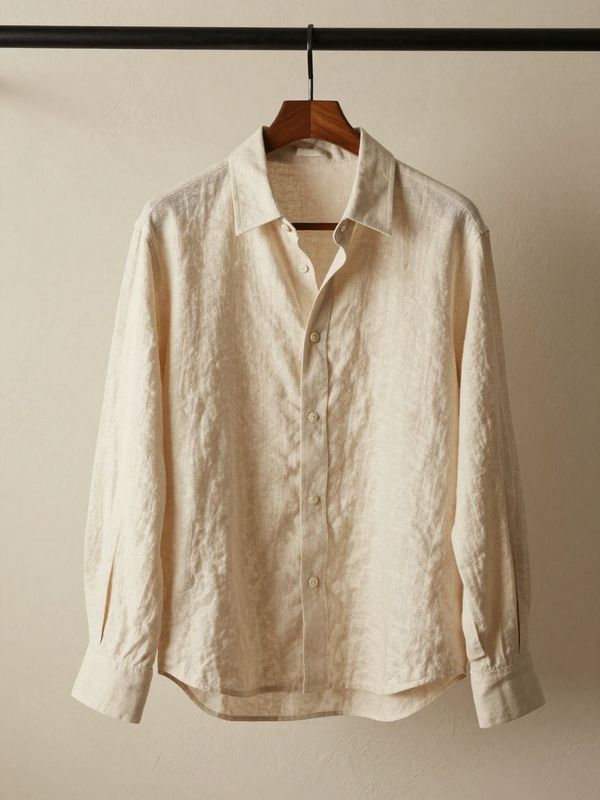
Linen creases. That is the whole point.
A short defence of a fabric that refuses to pretend, and how we choose the weights we use.
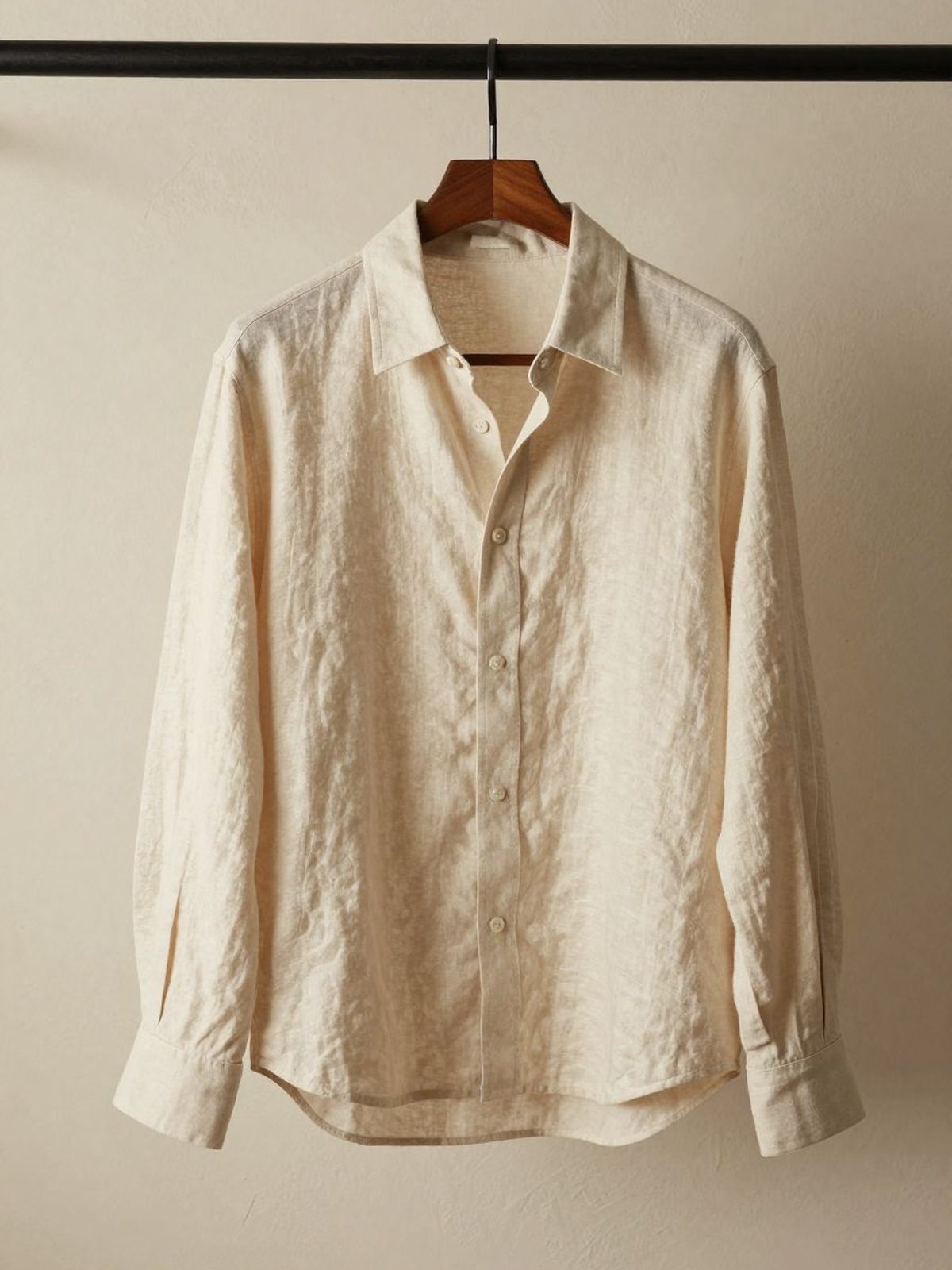
People ask us to make the linen crease less. We could — you blend it with polyester, or you resin it, and it behaves. It also stops breathing, which in a Riyadh July is the only job it had.
Linen is a bast fibre. It is hollow, it wicks, it is stronger wet than dry, and it does not hold heat against the skin. It creases because the fibre has no elasticity — it does not spring back — and that same stiffness is why a linen shirt stands away from the body instead of clinging. The crease is the fabric telling you it is doing its job.
How we choose weight
Below 150 grams a linen goes translucent and rumples into a ball. Above 220 it stops draping and starts standing up on its own. Our shirts sit between 165 and 185. Our trousers between 190 and 200, because a trouser needs a little more body to fall in a straight line from the hip. Every one is washed once at the factory so it arrives soft.
How to look after it
- Machine wash cold on gentle. Linen does not need heat to be clean.
- Hang or lie flat to dry. A tumble dryer sets creases you cannot iron out.
- Iron warm while it is still slightly damp, on the reverse. Or do not iron it at all — the second option is the one we prefer.
Wear it, wash it, wear it. That is the entire care routine, and it is the same for the trousers and the short.